
Submitted by Elisabeth_Davies on
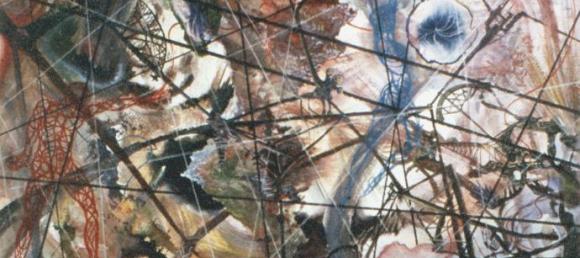
Anyone who has struggled with impulsive thoughts or compulsive behaviors can relate to the pandemonium that can go on in one’s mind. Impulsive thoughts are persistent or repetitive ideas or images that are experienced as intrusive or inappropriate and that cause mental distress. Compulsive behaviors are repetitive behaviors that a person feels driven to participate with as an attempt to decrease the impulsive thoughts and mental distress.
An effective technique that I use with clients who want to manage impulsive thoughts and compulsive behaviors is Guided Imagery. Guided Imagery helps clients reach a relaxed, focused state so that they can harness the power of their mind to bring about positive change.
Some other benefits of Guided Imagery include:
• Relaxing the body quickly to provide significant stress reduction *
• Allowing deeper levels of insight and wisdom held on a subconscious level
• Using the power of the mind to influence the body’s functioning as a tool for self-healing **
• Elevating mood, by decreasing depression, fatigue, stress and mood disturbance ***
I was conducting a guided imagery technique at a workshop for compulsive over-eaters several months ago, to help them connect to the subconscious beliefs that keep their compulsive behavior in place. I asked the attendees if they wanted to share any information they received after doing the guided imagery exercise. One woman shared, ‘The image that I got from this exercise was me standing at the kitchen counter eating as my parents were fighting in the background.’ A situation she had no control over as a young girl. It never occurred to her that she could leave, so she would use food to stuff down feelings that were not safe to express in her chaotic home. Another woman shared a similar image that came up for her. When she was a young girl, her mom and step dad would fight at the kitchen table during dinner, completely ignoring how upset she was by their arguing. She would overeat and stuff down the feelings of being in a chaotic situation she had no control over. Often times when we feel a situation we are experiencing is chaotic or not in our control, we become more vulnerable to impulsive thoughts and unhealthy behaviors as an attempt to distract or cope with a situation we feel unable to resolve.
I conducted a Guided Imagery technique for an addiction workshop I facilitate each week with attendees who compulsively use alcohol or drugs to cope with the chaos in their minds or lives. Afterwards the attendees reported being able to identify stored emotions, specifically anger and powerlessness they experienced in situations that were chaotic or abusive growing up. Situations they had no control over and felt unable to leave. During the guided imagery exercise, I asked, ‘What does addiction look like in our being?’ An attendee shared, ‘I was shown an image of what appeared to be a small round ball of energy bouncing all over, with no order to it.’ Then I asked, ‘What can contain or calm that energy?’ She responded, ‘I saw an image of a hand of peace cupping it. When the image of the ball of chaotic energy was contained in the cupped hand of peace it stopped bouncing.’ Peace is a state of harmony and order and freedom from mental disturbance. Each person who participates in Guided Imagery perceives images that are unique to them.
Here is an effective technique to practice, when your thoughts or circumstances are chaotic:
Start with 60 seconds of a 'Sleep Breathing' technique to decrease tension and drive in your being. 'Sleep Breathing' calms racing thoughts, decreases our nervous system activity, and restores internal stability and psychological equilibrium to our being. 'Sleep Breathing' is how our body breathes for us when we are asleep. You can practice this technique with your eyes open or closed. Closing your eyes helps shut out the visual stimulus around you. I suggest you do this sitting down, in a quiet place without any distractions. If you are at work, you can go to a bathroom, a stairwell, or an empty office. Bring your full attention to your breathing. Let your body breathe all on its own, with no assistance from you at all. Within several seconds you will notice your muscles relax. As your breathing resets to its natural breathing pattern, your thoughts become less dominant and your nervous system activity calms. Having your mind focus on how your body breathes all on its own is also a way to prepare you for Guided Imagery.
Whenever your thoughts or situation feel chaotic during the day, say to yourself, ‘I don’t have to stay in chaos.’ Take in a deep breath and say in your mind, ’breathing in peace.’ When you exhale imagine peace expanding throughout your entire being. Do this deep breathing for several seconds, until peace calms chaos.
Written by Elisabeth Davies, MC
Elisabeth facilitates weekly workshops in Peoria, AZ , using her workbook ,Good Things Emotional Healing Journal: Addiction- Effective Strategies to Manage Unwanted Habits and Compulsive Behaviors'
To find out more about her workshops, services and products visit www.GoodThingsEmotionalHealing.com
I would like to thank Christopher Bauman for giving me permission to use his artwork, 'Primary Chaos'
*Elizabeth Scott, MS 10-10-2007 http://stress.about..com/od/generaltechniques/p/profileimagery.htm
**Chris Dinesen Rogers June 16-2010 http://www.livestrrong.com/article/150430-benefits-of-guided-imagery/
***http://stason.org/TULARC/health/alternative-medicine/Guided-Imagery-Health-Benefits.html
Add new comment